40 Trim Haircut: Latest Hairstyles, Personalise Your Hair
A trim haircut is a simple yet essential part of hair care that focuses on removing a small portion of hair length to maintain shape, health, and cleanliness. Unlike major haircuts that involve significant changes in style or length, a trim haircut is mainly done to prevent split ends, maintain the current hairstyle, and keep the hair looking fresh and neat.
What Is a Trim Haircut
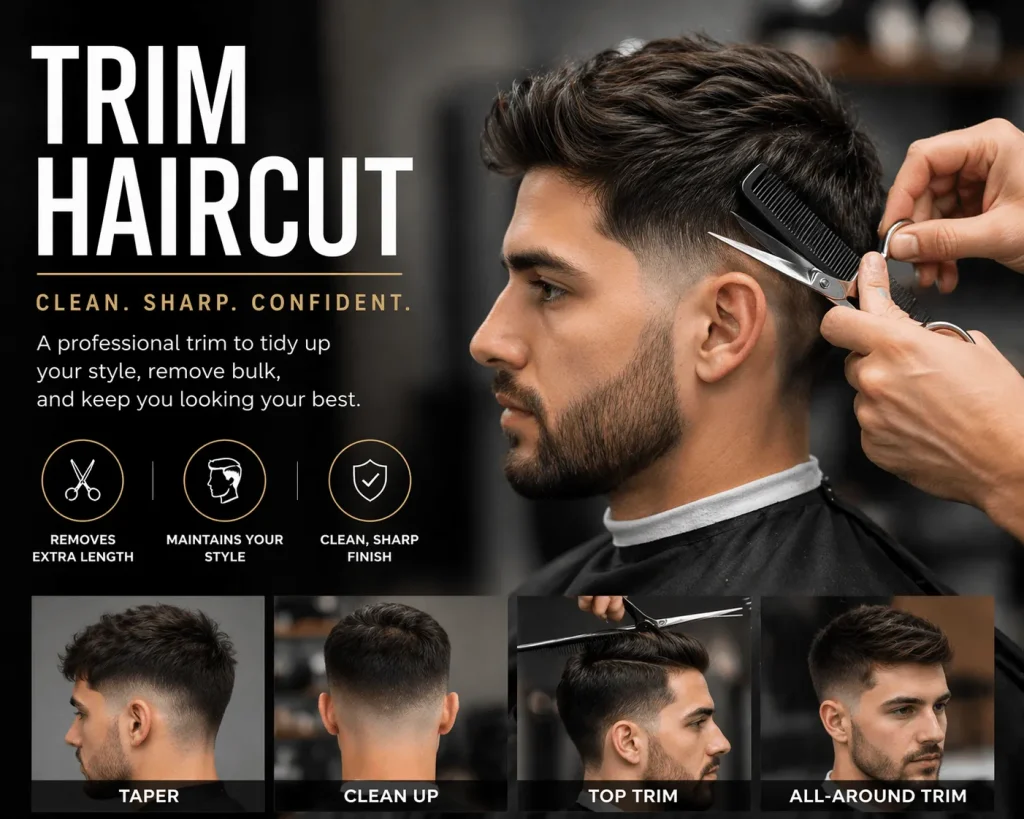
A trim haircut involves cutting only the damaged or uneven ends of the hair while preserving the overall length and style. It is not meant to drastically change the appearance but rather to refine and maintain the existing haircut.
Trimming is a routine maintenance practice that helps keep hair healthy over time, especially for those growing their hair long or maintaining a specific hairstyle.
Key Features of a Trim Haircut
One of the main features of a trim haircut is minimal length reduction. Only a small amount of hair is cut, usually just enough to remove split or damaged ends.
Another important feature is maintenance of shape. A trim helps preserve the original structure of the haircut, ensuring that layers, edges, or styles remain clean and balanced.
A trim also contributes to improved hair health. By removing damaged ends, it prevents further breakage and helps the hair grow in a healthier condition.
Why Trim Haircuts Are Important
Regular trims are essential for maintaining healthy hair. Split ends, if left untreated, can travel up the hair shaft and cause more damage. Trimming helps stop this process and keeps the hair in better condition.
Trims also improve the overall appearance of the hair. Even if the hairstyle remains the same, removing dry or uneven ends makes the hair look smoother, shinier, and more polished.
For individuals growing their hair, trims are still important because they prevent damage that could slow down healthy growth in the long run.
Types of Trim Haircuts
Basic Trim
A basic trim involves cutting a small amount of hair evenly across the ends. It is commonly used to maintain straight or simple hairstyles.
Layer Maintenance Trim
For layered haircuts, a trim helps maintain the structure of the layers. The stylist adjusts the ends without altering the overall layering pattern.
Split End Trim
This type of trim specifically targets split ends. Only the damaged portions of the hair are removed, preserving as much length as possible.
Shape Trim
A shape trim focuses on maintaining the outline of the haircut. It ensures that the hairstyle continues to look well-defined and balanced.
Best Hair Types for Trim Haircuts
Trim haircuts are suitable for all hair types, including straight, wavy, curly, thick, and fine hair. Every hair type benefits from regular trimming to maintain health and manageability.
Straight hair often shows split ends more clearly, making trims particularly important. Wavy and curly hair may require trims to maintain definition and reduce frizz. Thick hair benefits from trimming to remove excess bulk at the ends, while fine hair gains a healthier appearance through regular maintenance.
How Often Should You Get a Trim
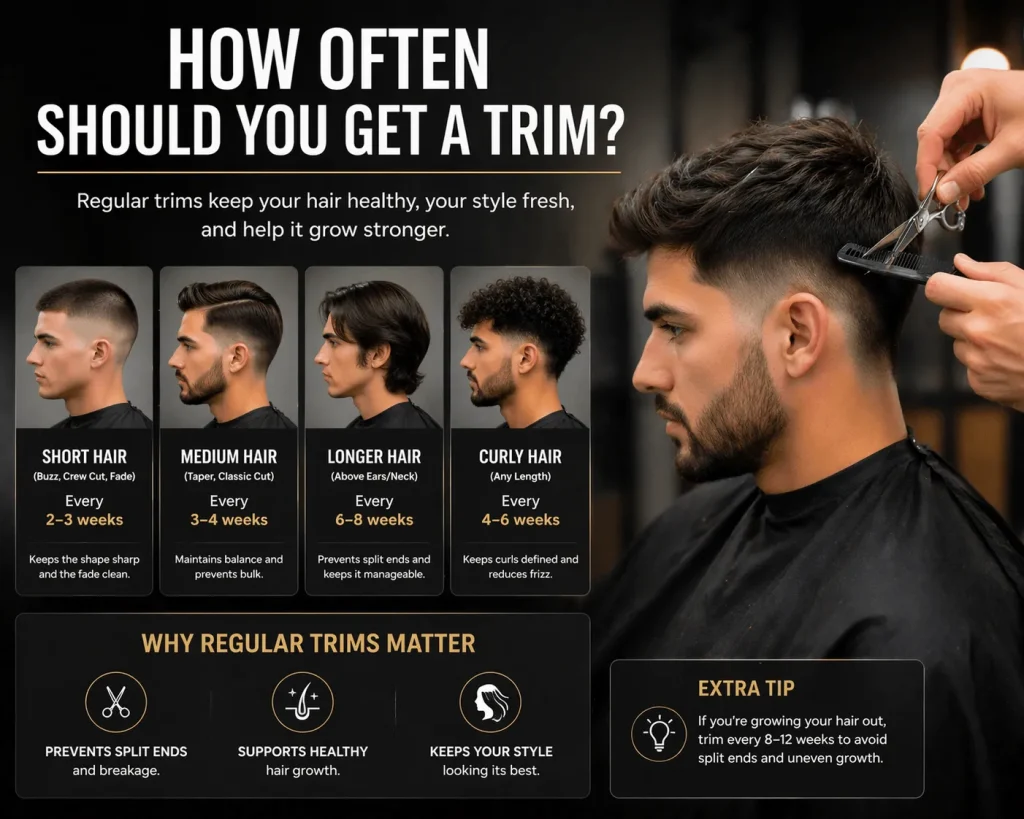
The frequency of trims depends on hair type, growth rate, and condition. On average, a trim is recommended every six to eight weeks to maintain healthy ends.
For individuals with slower hair growth or minimal damage, trims can be done less frequently. However, those who use heat styling tools or chemical treatments may need more regular trims to prevent damage.
How to Style After a Trim Haircut
After a trim, hair often looks more polished and manageable. Styling becomes easier because the ends are clean and even.
Simple styling techniques such as blow-drying, straightening, or light curling can enhance the appearance of freshly trimmed hair. Using lightweight products helps maintain a natural and smooth finish.
Maintenance and Care
Maintaining hair between trims is important to extend the benefits of the haircut. Using proper hair care products such as moisturizing shampoos and conditioners helps keep the hair healthy.
Avoiding excessive heat styling and protecting hair from environmental damage also helps reduce the need for frequent trimming. Regular brushing and gentle handling prevent unnecessary breakage.
Who Should Get a Trim Haircut
A trim haircut is suitable for anyone who wants to maintain healthy hair without changing their current style. It is especially beneficial for individuals growing their hair, as it helps keep the ends clean while preserving length.
It is also ideal for people experiencing split ends, dryness, or uneven hair growth. Regular trims help maintain a neat and professional appearance.
Benefits of a Trim Haircut
One of the main benefits of a trim haircut is improved hair health. Removing damaged ends prevents further breakage and keeps the hair strong.
Another benefit is enhanced appearance. Even a small trim can make the hair look fresher, smoother, and more styled without major changes.
Trim haircuts are also low-maintenance and practical, making them an essential part of any hair care routine.
Conclusion
A trim haircut is a simple but important step in maintaining healthy, well-groomed hair. By regularly removing damaged ends and preserving the overall style, trims help improve both the appearance and condition of the hair. Suitable for all hair types and styles, a trim haircut ensures that the hair remains clean, balanced, and manageable over time. With consistent care and regular trimming, it becomes easier to maintain long-term hair health and a polished look.