25 Afro Haircut: Styles, Types, and Complete Grooming Guide
The afro haircut is more than just a hairstyle. It represents culture, confidence, and natural beauty. From classic, rounded afros to modern fades and shaped styles, the afro haircut offers many options for different face shapes, hair lengths, and personal styles.
This guide covers the meaning of the afro haircut, popular types, how to maintain it, and how to choose the right afro style.
Quick overview:
Afro haircuts range from short tapered afros to full natural styles. Regular shaping, moisture care, and clean edges keep the look fresh and healthy.
What Is an Afro Haircut?
An afro haircut is a natural hairstyle where curly or coily hair is grown out and shaped into a rounded or structured form. The texture is the main feature, giving the hair volume and presence.
Unlike straight hairstyles, afro haircuts rely on natural curl patterns rather than heavy styling. The shape can be soft and round or sharp and defined, depending on the cut.

Why Afro Haircuts Are Popular
Afro haircuts remain popular because they:
- Celebrate natural hair texture
- Work for many face shapes
- Allow creative shaping and fading
- Require fewer heat tools
- Make a strong personal statement
They are also flexible, allowing both classic and modern looks.
Types of Afro Haircuts
Classic Rounded Afro
The classic rounded afro is full, even, and symmetrical. The hair is shaped into a soft round form with no sharp fades.
This style highlights natural volume and texture. It works best for medium to long hair and suits oval and round face shapes. Regular shaping helps maintain the balanced look.

Short Afro Haircut
A short afro keeps the hair close to the scalp while maintaining texture. It’s neat, simple, and easy to manage.
This style is ideal for men who want a clean look without losing their natural curls. It also works well in professional settings and hot climates.

Tapered Afro
The tapered afro keeps the hair longer on top while gradually shortening the sides and back.
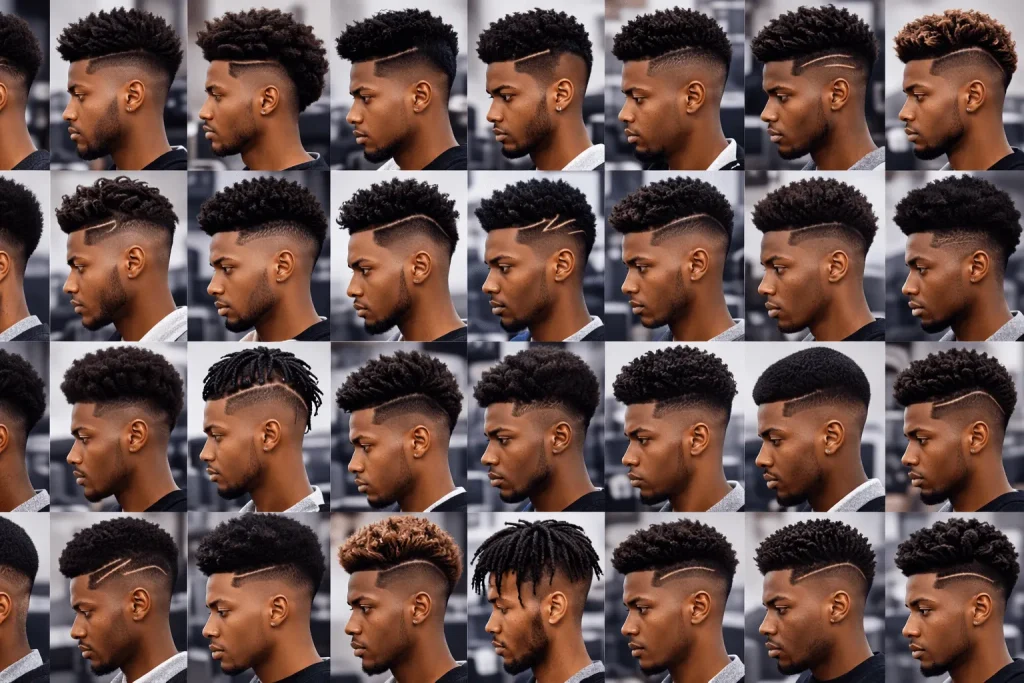
This adds structure and definition to the afro shape. It frames the face well and is one of the most requested modern afro styles. The taper keeps the haircut sharp without removing natural volume.

Afro Fade Haircut
The afro fade combines a full or medium afro on top with faded sides.
You can choose:
- Low fade for subtle contrast
- Mid fade for balance
- High fade for a bold look
This style is clean, modern, and works well with line-ups.

High Top Afro
The high top afro features tall volume on top with shorter or faded sides.
This haircut makes a strong statement and suits confident personalities. It works best with thick hair and requires regular trimming to maintain height and shape.

Afro with Line-Up
A line-up adds sharp edges around the forehead, temples, and neckline.
This style creates a crisp contrast between the hair’s natural texture and sharp, structured lines, giving the afro a neat, well-defined appearance—especially when paired with a fade or taper, a look commonly seen in modern soccer player haircuts.

Afro with Beard
An afro paired with a beard creates balance between the top and bottom of the face.
The key is blending. Clean beard lines and a smooth transition between sideburns and beard help the style look intentional and polished.

Curly Afro
Some afros feature looser curls rather than tight coils.
This type gives more movement and softness. It looks great when shaped lightly and moisturized well to avoid frizz.

Natural Afro (No Shape)
This afro is grown freely with minimal shaping.
It focuses on authenticity and volume rather than structure. Moisture care is essential to keep the hair healthy and manageable.

How to Choose the Right Afro Haircut
Consider these factors:
- Face shape: Tapered or faded afros suit round faces. Rounded afros suit oval faces.
- Hair length: Short afros are easier to maintain. Longer afros allow more styling options.
- Lifestyle: Active lifestyles benefit from shorter or tapered styles.
A skilled barber helps shape the afro correctly.

also Try Wavy Mod Cut.
Afro Haircut Maintenance Tips
Moisturize Regularly
Afro hair needs moisture. Use leave-in conditioner or natural oils to prevent dryness.
Pick the Right Tools
Use wide-tooth combs or afro picks to avoid breakage.
Trim and Shape
Visit the barber every 3–5 weeks to maintain shape and edges.
Protect at Night
Use a satin or silk bonnet to reduce friction while sleeping.

Common Afro Haircut Mistakes
- Skipping moisture care
- Over-shaping and losing volume
- Using harsh shampoos too often
- Ignoring edge maintenance
Avoiding these keeps your afro healthy and defined.
FAQs
What hair type is best for an afro haircut?
Afro haircuts work best with naturally curly or coily hair.
How often should I trim my afro?
Every 3–5 weeks to maintain shape and clean edges.
Can afro haircuts be professional?
Yes. Short, tapered, or neatly shaped afros are suitable for professional environments.
Do afro haircuts require daily styling?
No. Most afro styles only need moisture and light shaping.
Can women also wear afro haircuts?
Yes. Afro haircuts are worn by all genders and can be customized to personal style.
Final Thoughts
The afro haircut is timeless, expressive, and versatile. From classic rounded styles to modern fades and tapers, there’s an afro haircut for every personality and lifestyle. With proper care, shaping, and moisture, the afro remains one of the strongest natural hairstyles.