Self Haircut: A Complete Guide to Cutting Your Own Hair Safely and Effectively
A self haircut refers to the practice of cutting your own hair at home without professional assistance. It has become increasingly popular due to convenience, cost savings, and the ability to maintain your hairstyle between salon visits. While it may seem challenging at first, with the right tools, techniques, and patience, a self haircut can be done successfully.
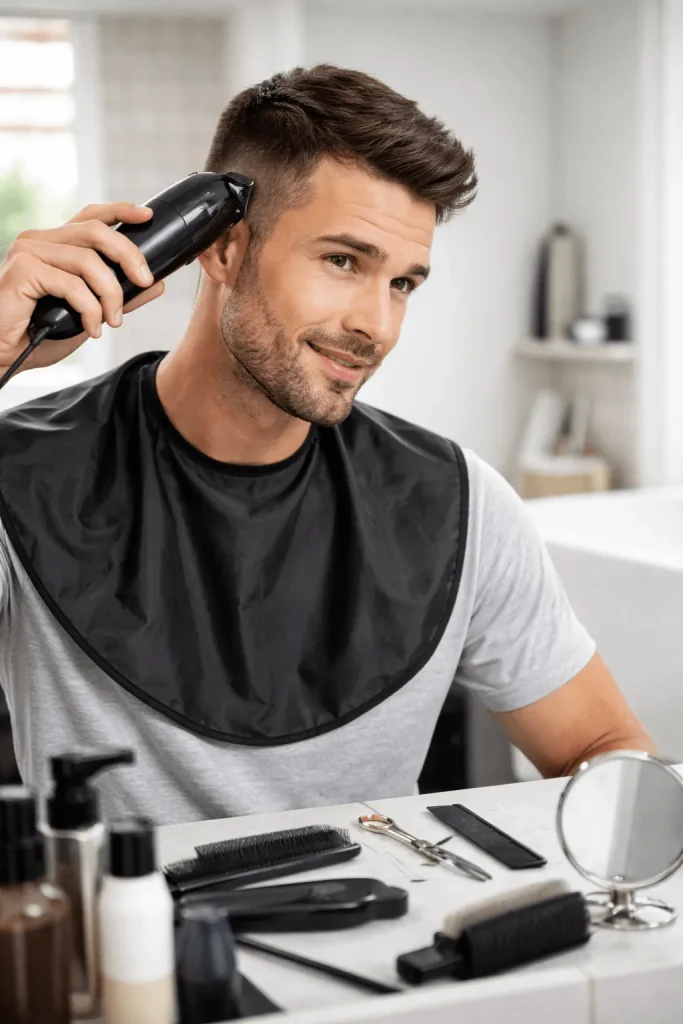
What Is a Self Haircut
A self haircut involves trimming or shaping your own hair using basic tools such as scissors, clippers, and mirrors. It can range from simple trims to more detailed styling, depending on skill level and confidence.
Most people start with small adjustments like trimming split ends or maintaining an existing haircut. More advanced self haircuts may include layering, fading, or shaping the hair.
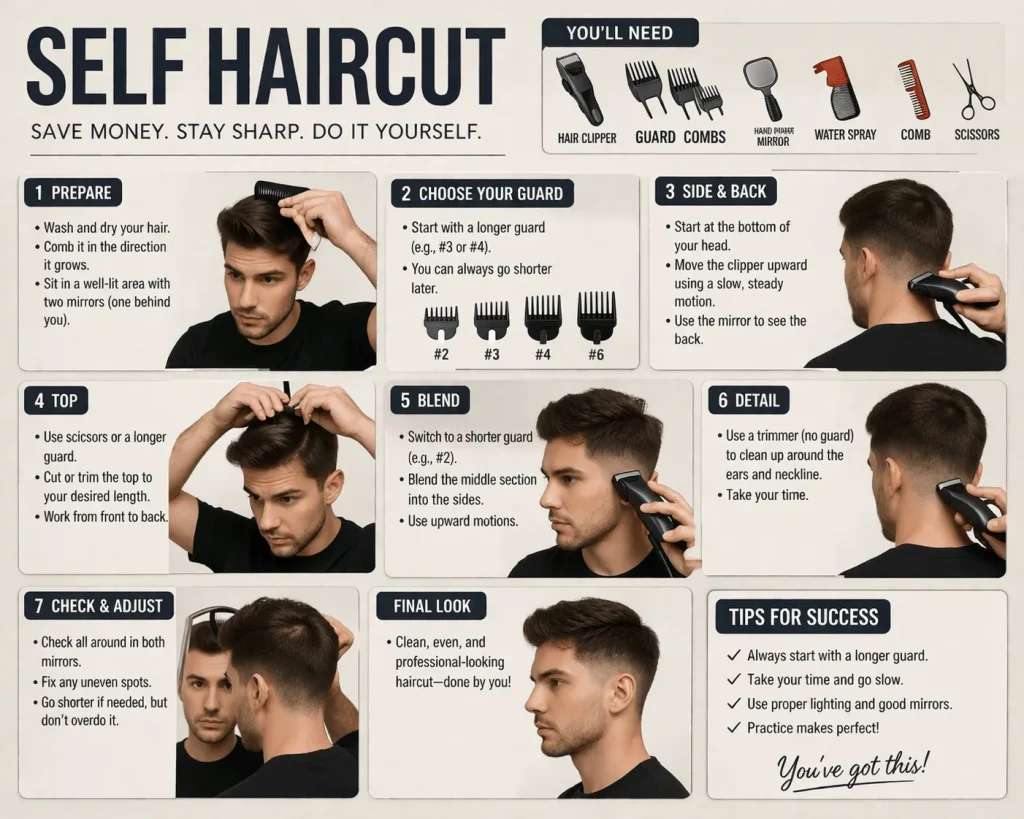
Benefits of a Self Haircut
One of the main advantages of a self haircut is convenience. You can cut your hair anytime without scheduling an appointment or visiting a salon.
Another benefit is cost savings. Regular salon visits can be expensive, and doing your own haircut helps reduce these costs over time.
A self haircut also allows for greater control. You can adjust your hair gradually and make small changes without committing to a major transformation.
Risks and Challenges
Despite its benefits, a self haircut comes with challenges. Achieving symmetry and balance can be difficult, especially when cutting the back of the head.
There is also a risk of cutting too much hair or making uneven sections. Without proper technique, the final result may not match expectations.
Limited visibility is another issue. Even with mirrors, it can be hard to see all angles clearly, which increases the chances of mistakes.
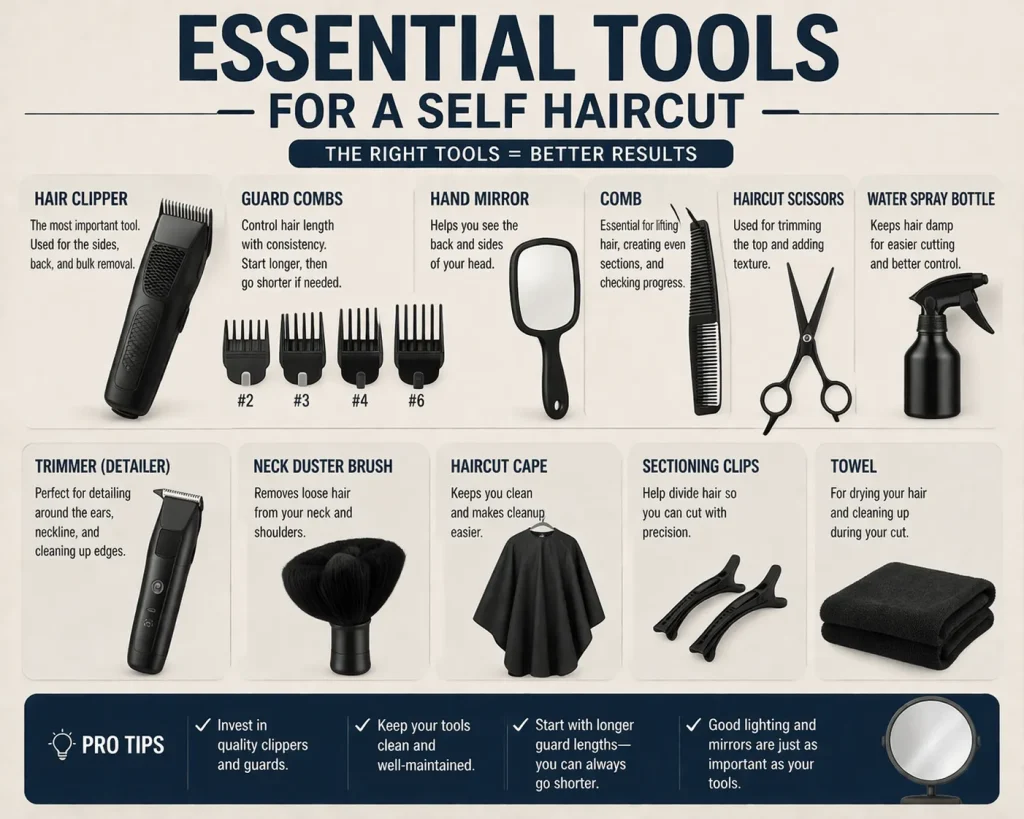
Essential Tools for a Self Haircut
To perform a self haircut effectively, having the right tools is important. Sharp hair-cutting scissors are essential for clean and precise cuts. Regular household scissors should be avoided as they can damage the hair.
Clippers are useful for short hairstyles or trimming the sides and back. A comb helps in sectioning and aligning the hair, while clips can be used to hold sections in place.
A mirror setup is also important. Using a main mirror along with a handheld or second mirror allows better visibility from different angles.
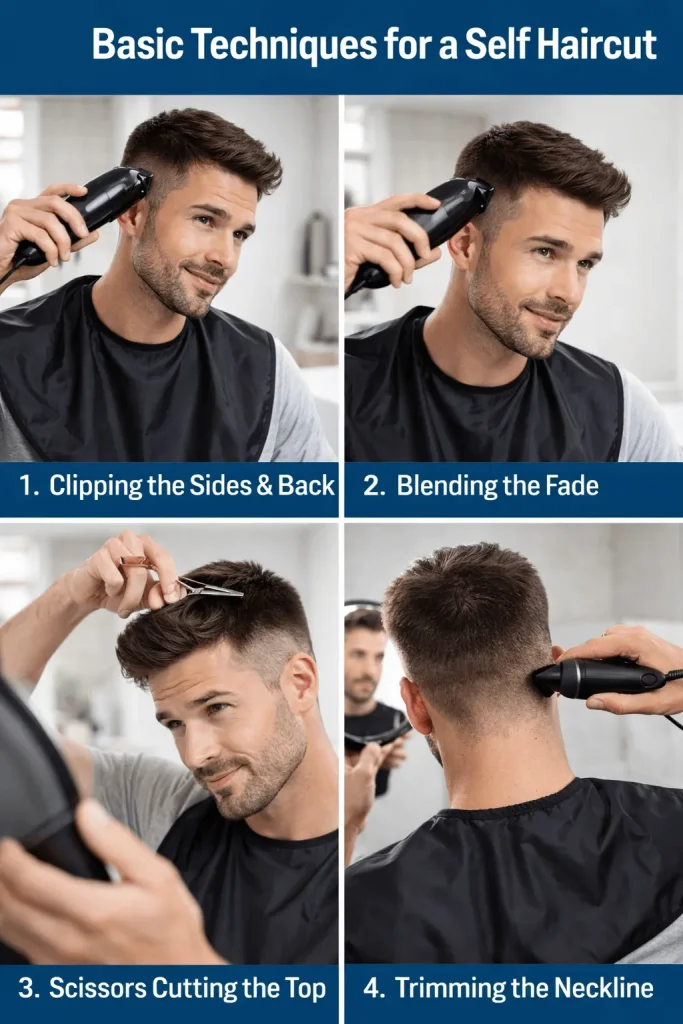
Basic Techniques for a Self Haircut
Trimming the Ends
Trimming the ends is the easiest type of self haircut. The hair is combed straight, and a small amount is cut evenly across to remove split ends.
Point Cutting
Point cutting involves cutting into the ends of the hair at an angle rather than straight across. This technique softens the edges and creates a more natural look.
Layering
Basic layering can be done by dividing the hair into sections and cutting at different lengths. However, this technique requires caution, as uneven layers can affect the overall shape.
Using Clippers
For short hairstyles, clippers can be used to maintain the length on the sides and back. Different guard sizes help control the length and create a uniform result.
Step-by-Step Approach to a Self Haircut
Before starting, the hair should be clean and slightly damp for better control. It should be combed thoroughly to remove tangles.
The hair is then divided into sections to make the process more manageable. Cutting should be done slowly, starting with small amounts to avoid over-cutting.
Checking the hair from different angles during the process helps maintain balance. After finishing, minor adjustments can be made to even out any uneven areas.
Tips for a Successful Self Haircut
Taking your time is one of the most important tips. Rushing increases the chances of mistakes. It is better to cut less and gradually adjust as needed.
Using proper lighting improves visibility and helps achieve more accurate results. Working in front of a mirror with good lighting is essential.
Starting with simple styles is recommended for beginners. Complex cuts should be avoided until you gain more experience.
Maintenance and Aftercare
After a self haircut, it is important to clean up any loose hair and style the hair to check the final result. Minor adjustments can be made if necessary.
Regular trims help maintain the shape and prevent split ends. Proper hair care, including conditioning and avoiding excessive heat, keeps the hair healthy.
If the result is not satisfactory, visiting a professional stylist can help fix any issues and restore balance.
Who Should Try a Self Haircut
A self haircut is suitable for individuals who want to maintain their hairstyle between salon visits or prefer a cost-effective option. It is ideal for simple trims and basic maintenance.
However, those who want complex styles or major changes may benefit more from professional services, as achieving detailed results at home can be challenging.
Conclusion
A self haircut is a practical and convenient way to manage your hair at home. While it requires patience and practice, it can be an effective solution for maintaining hair health and style. By using the right tools, following basic techniques, and taking a careful approach, it is possible to achieve a clean and manageable result. With time and experience, self haircuts can become easier and more precise, offering both flexibility and independence in personal grooming.